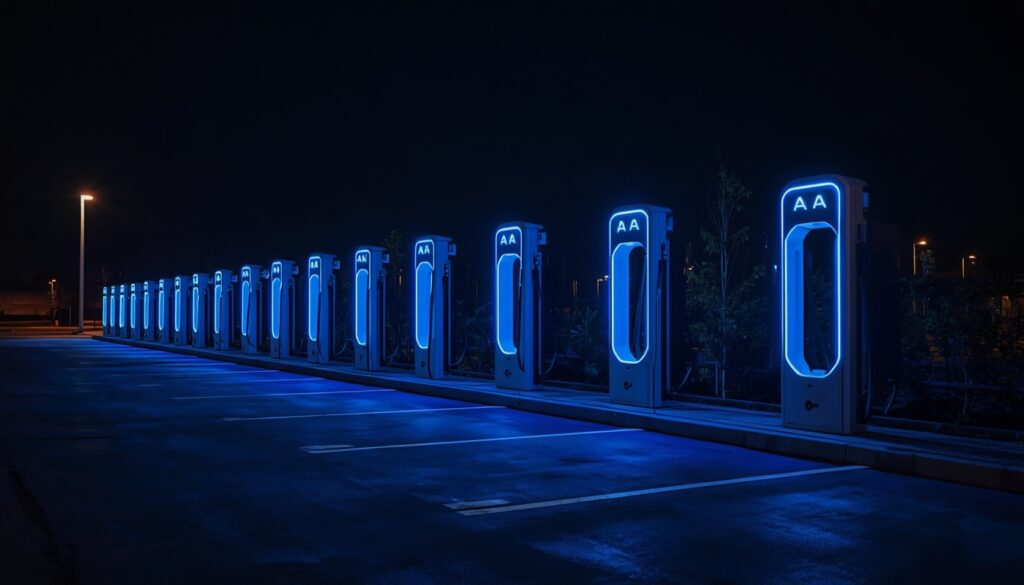
The Industrial-Energy Nexus tightens as energy security becomes a primary determinant of industrial real estate value. Investors, tenants, and planners now treat power reliability as a core asset attribute. The evidence suggests reliability, flexibility, and decarbonization metrics now shape lease rates and hold periods.
Capital formation responds. Lenders demand proof of resilient onsite energy capacity and grid-interactive systems. Operational reality requires quantifiable metrics such as Net-Zero Alpha and LCOE to underwrite transactions and refinance assets.
Strategic owners accept that decarbonization aligns with resilience. Carbon displacement strategies now affect insurance, permitting, and tenant retention. Strategic Takeaways
Energy Security Redefines Industrial Real Estate
Market Signals and Tenant Expectations
Industrial tenants now price energy security into occupancy decisions. High-energy users demand guaranteed uptime, predictable costs, and low Carbon Intensity profiles. Manufacturers and cold-chain logistics prioritize sites with defined redundancy, onsite generation, and contractual grid services. Lease negotiations include energy performance requirements and service-level agreements for power continuity. Tenants transfer operational risk to landlords through bespoke rent and pass-through clauses that reflect expected outage costs.
Institutional investors treat energy capability as a valuation lever. Buildings with integrated microgrids, storage, and high-efficiency HVAC command premium yields. Lenders verify projected savings against LCOE scenarios and regional grid stress forecasts. Underwriting now embeds scenarios for frequency events, price volatility, and regulatory penalties to avoid hidden downside in cash flows.
Municipalities influence location choice through grid capacity signals. Queue times affect project timelines, forcing landlords to consider alternative energy procurement and virtual interconnections. The evidence suggests tenants accept higher rents for reduced interruption risk, but only if transparency in performance metrics exists. Strategic Takeaways
Infrastructure as Strategic Asset
Owners reposition electrical, thermal, and control infrastructure as strategic assets. Layered investments in switchgear, redundant feeders, and distribution automation reduce the probability and impact of outages. Integrating grid-interactive HVAC and building management enables assets to provide ancillary services, generating new revenue lines. Capital allocation increasingly favors adaptable systems that can support future electrification and load-shifting strategies.
Operational teams reframe maintenance as mission-critical. Preventive regimes, digital twins, and condition-based replacements lower failure rates. Owners prioritize compatible electrical capacity that can accommodate load growth from electrification and battery charging. The approach reduces decarbonization friction during retrofit phases.
Valuation models now use energy resilience factors in discount rate adjustments. Properties that meet performance thresholds demonstrate lower expected downtime, reduced tenant churn, and sustained cash flows. Investors that quantify resilience through metrics achieve better pricing discipline and selective acquisition strategies.
Operational Decarbonization and Asset Resilience
HVAC Electrification and Grid Services
Electrification of HVAC drives both decarbonization and resilience. High-efficiency heat pumps paired with thermal storage reduce onsite fossil dependence. Electric HVAC systems provide flexible load profiles, enabling participation in demand response and frequency regulation. Grid-interactive HVAC can act as a distributed battery, shifting consumption away from peak price periods.
Electrified HVAC interacts with building controls for predictive load shaping. Advanced control strategies reduce peak demand and smoothing fosters better integration with variable renewables. Operators monetize flexibility through contracted grid services, improving net operating income. Performance contracts now include shared savings tied to measured load flexibility.
Operational teams must manage thermal inertia, comfort risk, and equipment life-cycle impacts. Controls tuning, scheduled maintenance, and warranty alignment minimize decarbonization friction. Owners should set COP targets and monitor partial-load performance to ensure reliability and efficiency gains. Strategic Takeaways
Resilience through Redundant Energy Paths
Redundancy reduces single points of failure. Multiple feeders, onsite generation, and storage create layered defense against outages. Owners implement N+1 strategies across critical systems to maintain continuity for essential tenants. Redundant energy paths also facilitate staged maintenance without tenant disruption.
Microgrids offer controlled islanding that decouples assets from grid instability. Design must include synchronization controls, black start capability, and seamless transition protocols. Storage sizing depends on outage risk appetite and cost-benefit analysis. Owners measure resilience benefits in avoided downtime costs and higher occupancy certainty.
Coordination with grid operators maximizes resilience value. Interconnection agreements, clear fault ride-through parameters, and grid-forming inverter standards reduce the risk of forced disconnections. Proactive regulatory engagement shortens queue times and secures firm capacity commitments.
Grid-Interactive HVAC and Commercial HVAC Integration
Technical Performance and COP Gains
Commercial HVAC modernization improves operational emissions and reliability. Variable refrigerant flow, high-efficiency compressors, and scaled heat pumps raise seasonal COP performance. Equipment selection must reflect partial-load efficiency, not just nameplate ratings. Real-world efficiency requires matched controls, ductwork integrity, and hydronic balancing.
Integration with building automation allows performance tracking and fault detection. Predictive maintenance reduces unexpected failures and extends equipment life. Data collection on runtime, capacity modulation, and defrost cycles informs commissioning and tuning. Owners set measurable performance baselines and tie incentives to sustained gains.
Upgrades require coordination of electrical capacity, protection settings, and thermal plant sequencing. Switching to electric heat increases peak electrical demand without smart controls. Owners must plan distribution upgrades and deploy managed charging strategies for simultaneous electrification projects. Strategic Takeaways
Demand Response and Flexibility Revenue
HVAC systems provide predictable, dispatchable flexibility. Aggregators contract with facilities to reduce or shift load during system stress. Revenue from demand response improves project payback and lowers effective LCOE for onsite generation. Contracts vary by duration, notification time, and performance verification.
Participation requires robust telemetry, telemetry security, and automated control pathways. Settlements depend on accurate baseline calculations and audit trails. Owners should seek contracts that align operational constraints with revenue certainty, preserving tenant comfort and process continuity.
Flexibility programs reduce grid strain and may accelerate permitting for interconnection. Regulators increasingly reward distributed flexibility with capacity credits and reduced connection charges. Treatment of HVAC as a grid resource changes capital allocation and the commercial case for integrated energy systems.
Clean Energy Synergies and Onsite Generation
Solar, Storage, and Heat Pumps Integration
Combining solar PV, battery storage, and heat pumping creates synergistic outcomes. Solar reduces daytime grid dependence, while storage smooths intermittency and provides backup. Heat pumps convert electricity into high-quality thermal energy efficiently, enabling thermal storage and load shifting.
Sizing must align with operational demand profiles, local irradiance, and grid tariff structures. Hybrid optimization delivers lowest life-cycle cost when storage offsets demand charges and supports critical loads during outages. Owners model co-optimized dispatch strategies that prioritize resilience and economic return.
Interoperability matters. Inverters, EMS, and HVAC controls must share open protocols for optimization. Investing in interoperability reduces retrofit costs and avoids vendor lock-in. The combined solution lowers Carbon Intensity and enhances tenant security through assured energy available on site.
LCOE Profiles and Carbon Displacement
Project economics hinge on effective LCOE for renewable assets and avoided marginal emissions from grid consumption. Sites on high-carbon grids achieve more rapid carbon displacement and faster paybacks. Owners model LCOE against wholesale price forecasts and expected ancillary revenues.
Carbon displacement calculations require hourly matching of onsite generation to load. Thermal storage increases displacement by shifting renewable electricity into off-peak thermal consumption. Owners produce transparent metrics for investors showing avoided emissions and expected operational savings.
Policy levers such as tax incentives, accelerated depreciation, and renewable tariffs materially affect total return. Developers must treat current incentives as variable and stress-test returns under tapering scenarios. Strategic Takeaways
The 2026 Decarbonization Compliance Framework
Regulatory Drivers: Part L, MEES, and Beyond
Regulation shapes capital planning and operational strategy. In the UK, Part L sets fabric and system efficiency expectations that affect retrofit timelines. MEES enforcement pressures landlords to meet minimum energy performance standards or face financial penalties and leasing constraints. EU and national schemes require increasing transparency in embodied and operational carbon.
Regulatory regimes now include grid access rules, generator registration, and performance standards for grid-forming inverters. Compliance timelines compress decision windows, forcing earlier investment in compliant systems. Failure to meet standards reduces asset liquidity in certain institutional portfolios.
Owners must align retrofit schedules with regulatory checkpoints to avoid stranded assets. Certifications and third-party verification reduce exposure during due diligence. Planning for evolving regulations protects asset value and maintains access to capital markets.
Reporting, Carbon Intensity Targets, and Penalties
Mandatory reporting frameworks require granular data. Scope 1 and Scope 2 accounting now includes location- and market-based treatments, and some jurisdictions demand hourly emissions intensity reporting. Auditable records tie into tenant disclosures and investor ESG covenants.
Penalties and fines now include escalating sanctions and limits on leasing for non-compliant assets. Insurers require adherence to specified resilience standards to maintain coverage terms. Investors demand verifiable reduction trajectories tied to Net-Zero Alpha targets.
Operational reality requires integrated data platforms that synthesize metering, weather, and grid emission intensity. Owners prepare for third-party audits and regulatory spot checks, and they model penalty exposure in downside scenarios. Strategic Takeaways
Financial and Market Impacts: Valuation, Insurance, CapEx
Asset Valuation and Net-Zero Alpha
Valuation now embeds energy security and decarbonization metrics. Buyers and appraisers include energy continuity in income and expense forecasts. Assets demonstrating lower outage exposure attract lower cap rates. The metric Net-Zero Alpha emerges as a premium measure reflecting risk-adjusted returns from decarbonized, resilient assets.
Underwriters apply stress scenarios for price volatility and physical risk. Discount rates adjust to reflect reduced operational risk from resilient energy systems. Investors quantify upside from flexibility revenues and reduced tenant churn to justify higher acquisition multiples.
Transparent measurement of energy performance linked to cash flows improves market liquidity. Portfolios that deliver predictable reductions in Carbon Intensity achieve differentiated access to green financing and preferred lender terms. This dynamic shifts capital toward owners with operational competence in energy systems.
Insurance, Underwriting, and Cost of Capital
Underwriters expand conditionality around energy resilience. Policies now exclude losses resulting from inadequate resilience measures or require endorsements for microgrid-covered events. Premiums depend on demonstrated redundancy and verified maintenance regimes.
Lenders require technical due diligence that includes energy system capability, interconnection agreements, and grid risk exposure. Debt covenants may include performance metrics for backup power and emissions intensity. Access to lower-cost capital ties directly to verifiable energy security investments.
Cost projections must include insurance premium shifts and covenant compliance costs. Owners that proactively invest in resilient energy systems reduce overall financing costs and increase optionality for asset disposition and recapitalization. Strategic Takeaways
| Metric | Impact on Value | Typical Range (2026) |
|---|---|---|
| Net-Zero Alpha | Premium to cap rate for resilient assets | 5–150 bps |
| LCOE (onsite solar + storage) | Drives payback and Opex reduction | £40–£110/MWh |
| Carbon Intensity (gCO2e/kWh) | Regulatory and tenant pressure | 50–600 gCO2e/kWh |
Operational ROI and Performance Metrics
Measuring Operational ROI and Key Metrics
Operational ROI combines capex, avoided outage costs, energy savings, and flexibility revenue. Metrics include payback period, internal rate of return, and lifecycle cost. Owners also track reliability metrics such as mean time between failures and uptime percentage for critical loads.
Energy-specific KPIs include COP for heating systems, storage round-trip efficiency, and realized demand response revenue. Tenants require transparent reporting on these KPIs to validate service-level agreements. Data integrity and third-party verification strengthen claim credibility.
Owners should adopt normalized metrics to compare projects across regions and regulatory environments. Sensitivity testing on electricity price volatility and grid emissions intensity clarifies the range of possible outcomes. Strategic Takeaways
Case Modeling and Sensitivity Analysis
Model scenarios must include outage probability distributions and correlated commodity price shocks. Sensitivity to changes in export tariffs, carbon prices, and incentive tapering is crucial. Scenario sets should range from base-case regulatory compliance to stress-case extended outages.
Financial models incorporate stochastic energy prices and deterministic operational improvements. Owners simulate how alternative control strategies affect revenue from demand response and capacity markets. Decision thresholds emerge where marginal resilience investments yield diminishing returns.
Transparent scenario documentation reduces negotiation friction with lenders and tenants. Models that quantify avoided downtime and incremental revenue simplify capital allocation decisions and prioritize interventions with rapid ROI.
Risk Modeling and the Shackleton Wintle Model
Introducing the Shackleton Wintle Energy Resilience Index
The Shackleton Wintle Energy Resilience Index, SW-ERI, provides a composite score from five domains: supply redundancy, onsite generation capacity, storage duration, control interoperability, and outage response capability. Each domain receives weighted scores based on regional grid risk, tenant criticality, and asset function.
SW-ERI correlates with underwriting outcomes and expected downtime costs. A higher SW-ERI reduces stress-test losses and lowers estimated probability of disruptive outages. The index ties to capital allocation by converting technical performance into a single risk-adjusted metric.
Institutional users apply SW-ERI within portfolio rebalancing to identify assets needing intervention. The model allows setting target thresholds for acquisitions, refinancing, and retrofit prioritization based on investor risk appetite.
Scenario Stress Tests and Decarbonization Friction
Stress tests simulate concurrent shocks such as heatwaves, transmission failures, and fuel supply interruptions. Tests reveal decarbonization friction points where rapid electrification increases peak demand and outpaces grid upgrades. Owners identify mitigation strategies such as staged electrification and added storage.
Stress outcomes feed into contingency planning and insurance negotiation. The tests also reveal regulatory exposure when assets fail to meet mandated performance during extreme events. Planners use results to schedule upgrades that reduce both operational and regulatory risk.
Calibration uses historical outage data, weather projections, and grid curtailment trends. Results guide capital prioritization, ensuring funds target interventions with highest reduction in expected loss.
Policy and Planning: Permits, Grid Access, and Implementation
Grid Connection, Curtailment, and Queue Management
Grid interconnection remains a gating constraint for many projects. Queue times affect project feasibility and financing certainty. Owners pursue alternative grid access models including private wires, behind-the-meter solutions, and contracted access through virtual power plants.
Curtailment risk alters expected generation and revenue profiles. Contracts and technical configurations must include compensation mechanisms or alternative dispatch plans. Owners negotiate interconnection conditions that allow export during surplus periods and firm drawdown during outages.
Active engagement with distribution network operators reduces uncertainty. Developers invest in queue management services and seek contractual rights to capacity upgrades. Strategic sequencing of projects minimizes delay exposure and secures operational timelines.
Planning, Permits, and Local Authority Constraints
Local permitting impacts project schedules and capital costs. Planning officers focus on visual impact, noise, and land use compatibility for energy infrastructure. Early stakeholder engagement reduces friction and speeds approval.
Owners must reconcile national decarbonization mandates with local planning constraints. Zoning, building codes, and environmental consents can add cost and delay. Proactive design changes, such as acoustic mitigation for generators, help secure approvals.
Timely permitting allows projects to capture available incentives and meet regulatory compliance windows. Failure to align construction timelines with incentive periods can materially change the economics of a project. Strategic Takeaways
Executive FAQ
How should a cold-chain warehouse in Northern England structure its energy resilience investments for 2026 compliance and operational continuity?
A cold-chain warehouse should combine high-efficiency heat rejection systems with redundant power feeds, onsite storage sized for 6–12 hours of critical load, and generator backup for extended outages. Prioritize grid-interactive HVAC controls to reduce peak demand. Contract for demand response only where temperature tolerance allows. Ensure Part L and MEES alignment, and document carbon displacement using hourly matching to prove reductions. Model outage cost per hour to justify storage and generator sizing to underwrite capital allocation.
What are realistic financial returns for rooftop solar plus battery serving a medium-size industrial park in 2026 UK markets?
Returns depend on tariff structures, demand profiles, and avoided network charges. Typical LCOE ranges from £40 to £80/MWh for combined installations in 2026. Savings derive from reduced import at peak hours, demand charge mitigation, and flexibility revenues. Payback usually falls between 6 and 12 years under current incentives. Sensitivity to wholesale price volatility and export tariffs can shift outcomes by several percentage points. Robust modeling should include curtailment scenarios and insurance costs.
How will insurers treat onsite microgrids during underwriting negotiations in 2026?
Insurers will demand verifiable maintenance, independent commissioning reports, and demonstrated islanding capability. Policies will include clauses requiring minimum SW-ERI thresholds for preferred terms. Underwriting will favor assets with tested black-start, automatic transfer switches, and documented cyber-security for EMS. Premiums fall for assets with demonstrated scheduled testing and third-party verification. Failure to produce documentation can lead to coverage exclusions for energy-related losses.
For multi-tenant industrial estates, how do you allocate costs and benefits of shared energy infrastructure?
Allocation must use metered consumption and validated benefit-sharing formulas. Owners can use sub-metering plus a transparent tariff that reflects marginal cost and service fees. Agreements should include usage rights during outages, priority curtailment schedules, and capital replacement contributions. Contractual clarity reduces disputes and protects landlord revenue. A governance structure with defined escalation and performance review schedules ensures operational fairness and maintains tenant trust.
What operational controls minimize decarbonization friction when electrifying process heat for a steel processing facility?
Staged electrification that aligns with available grid capacity reduces friction. Implement hybrid systems that retain fuel-backed redundancy during transition phases. Integrate thermal storage to decouple electrified heat demand from peak grid stress. Deploy grid-interactive controls that modulate heating cycles during system stress, preserving process integrity. Coordinate with local DNOs to secure incremental capacity and time upgrades to coincide with off-peak construction windows.
Conclusion: The Industrial-Energy Nexus: Why Energy Security is Now a Critical Real Estate Factor
Strategic Takeaways
Energy security now functions as a core determinant of industrial asset value. Owners must quantify resilience through metrics such as Net-Zero Alpha, COP, and Carbon Intensity. Integrating solar, storage, and heat pumps reduces operational risk and creates new revenue via flexibility markets. SW-ERI offers a standardized way to compare energy resilience across portfolios and to guide capital allocation decisions.
Operational decarbonization reduces exposure to regulatory penalties, lowers insurance costs, and increases tenant retention. Prioritize interoperability, verified performance baselines, and staged electrification to limit decarbonization friction. Active engagement with grid operators and regulators accelerates interconnection and secures firm capacity.
The commercial case for clean tech is now inseparable from resilience. Investors, lenders, and insurers value assets that deliver predictable energy service and demonstrable emissions reductions. Incorporate SW-ERI thresholds into deal underwriting and portfolio strategies to preserve asset value and access preferential capital.
Forecast: 12-Month Energy Market Trends
Electricity price volatility will moderate but remain elevated in regions with constrained generation. Capacity markets will tighten, increasing the value of onsite storage and demand flexibility. Grid operators will accelerate adoption of grid-forming inverter standards to enable microgrid integration, improving interconnection stability. Regulatory pressure will intensify reporting requirements and expand enforcement around building performance standards, raising compliance costs for laggard assets.
Investor appetite for resilient, low-carbon industrial assets will strengthen, compressing cap rates for compliant properties. Insurers will refine underwriting rules linking premiums to demonstrable energy resilience metrics. Owners that implement layered resilience and document performance will capture yield compression and reduce financing costs.
Executive Decarbonization Roadmap
- Conduct SW-ERI assessment across portfolio and set threshold targets.
- Prioritize HVAC electrification with thermal storage and set COP performance targets.
- Deploy solar plus storage sized for 6–12 hours critical load and model LCOE sensitivity.
- Negotiate interconnection and flexibility contracts, and secure queue position with DNOs.
- Implement verified reporting systems for Carbon Intensity and uptime metrics, and align capex with regulatory timelines.
Meta Description: Energy security now determines industrial real estate value, linking HVAC electrification, onsite clean energy, and 2026 compliance into investment decisions.
SEO Tags: HVAC electrification, industrial energy resilience, clean energy, decarbonization, microgrid, Net-Zero Alpha, SW-ERI