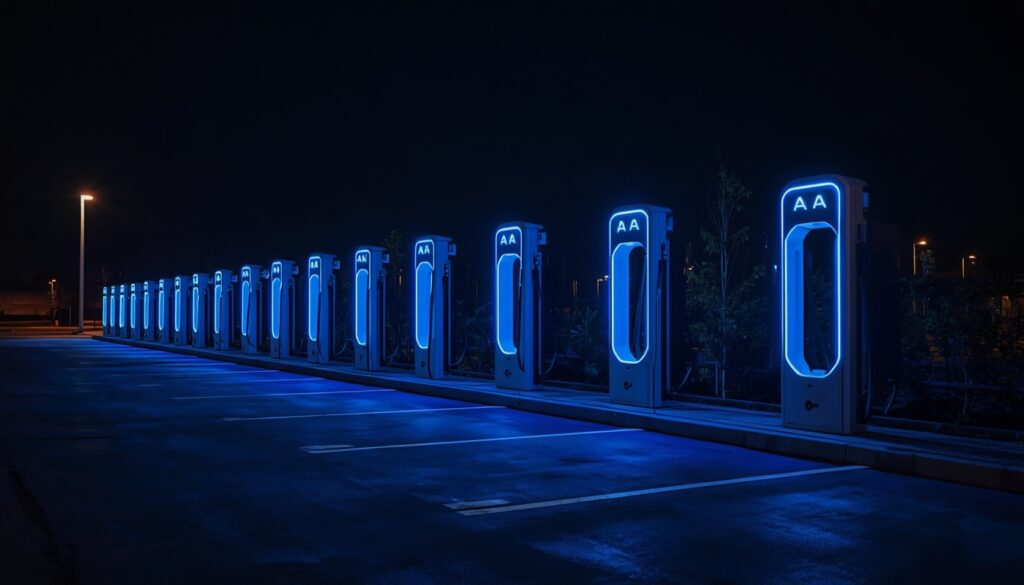
Decarbonizing Data Centers: The megawatt-scale demands of modern AI require decisive shifts in infrastructure strategy, not incremental fixes. Data centers operating at multi-megawatt power draw now drive portfolio risk across energy, compliance, and market volatility. Institutional owners must align HVAC innovation, clean power procurement, and grid engagement to preserve asset value while lowering carbon exposure.
===INTRO: Operational reality requires models that quantify carbon displacement by marginal load control, not abstract offsets. The evidence suggests meaningful decarbonization occurs where cooling, storage, and procurement coordinate to reduce grid carbon at the hour level. Financial models must therefore internalize LCOE, Carbon Intensity, and Net-Zero Alpha as linked performance drivers.
===INTRO: Strategic decarbonization demands a named analytic framework to guide investment, operations, and regulatory compliance. The Wintle Decarbonization Vector (WDV) Model provides a scoring vector for HVAC responsiveness, procurement depth, and resilience readiness. Institutional decision-makers must use such scoring to prioritize projects that lower total cost of ownership while raising carbon displacement per megawatt.
Decarbonizing Megawatt-Scale AI Data Centers
Load Characteristics and Carbon Baseline
AI workloads present steep, clustered power profiles that concentrate thermal output unpredictably. Operators now see sustained high-density racks with dynamic utilization that forces cooling systems to run near peak capacity. The baseline carbon footprint depends on hourly grid intensity, generator fallback usage, and the HVAC system’s seasonal efficiency.
Operators must measure marginal carbon at the rack level to prioritize interventions. Site telemetry should tag compute events with grid carbon signals. Fiscal controls should reprice nonessential compute when grid intensity exceeds acceptable thresholds. Achieving material carbon reductions requires aligning compute scheduling with cooling flexibility.
Transition planning requires capital allocation to technologies that deliver predictable carbon displacement. Liquid cooling, variable-speed chillers, and thermal storage each deliver different displacement profiles across time. Procurement strategies that ignore the hourly distribution of carbon risk will underperform in 2026 regulatory and market contexts.
Strategic Takeaways: Institutional asset value now hinges on Net-Zero Alpha and LCOE thresholds. Prioritize investments that demonstrably reduce Carbon Intensity on an hourly basis. Risk-adjust capital plans for fallback generator fuel exposure. Align compute scheduling with dispatchable cooling margins.
Grid-Interactive HVAC and Carbon Displacement Tactics
Thermodynamic Levers and Control Strategies
Grid-interactive HVAC uses control latitude to shift cooling loads across low-carbon windows. Modern chillers and free-cooling loops support pre-cooling, thermal storage charging, and load shifting to hours with lower Carbon Intensity. Distributed controls must integrate real-time grid signals and onsite sensors to avoid unintended performance drift.
Control strategies require precise demand forecasting for both compute and ambient conditions. Model predictive control reduces energy consumption while maintaining thermal safety. Integrating building management systems with energy market APIs enables monetization of flexibility through capacity markets or ancillary services where available.
Operational teams must formalize safe operating envelopes for temperature and humidity to expand flexibility without risking hardware. Vendors must provide deterministic response times and verified COP curves across operating points. Procurement must favor systems with validated part-load performance.
Strategic Takeaways: Treat HVAC as a dispatchable asset that yields carbon displacement and revenue. Buy equipment with documented part-load COP and rapid modulation. Embed grid signal feeds into control logic for verifiable emissions reductions. Executive Decarbonization Roadmap: 1) Establish hourly carbon baselines; 2) Invest in variable-speed chillers and liquid cooling; 3) Deploy thermal storage sized to shift peak cooling 2–6 hours; 4) Integrate controls with grid APIs for dispatchability; 5) Reprice compute windows to capture low-carbon hours.
Operational ROI and Lifecycle Economics
Cost Modeling and LCOE Tradeoffs
Capital decisions hinge on lifecycle returns that combine energy savings, carbon avoidance, and avoided compliance costs. Equipment selection should compare LCOE of on-site storage, onsite renewables plus storage, and contracted clean energy. Financial models must discount operational uncertainty and policy risk to present realistic paybacks.
Include maintenance, controls licensing, and integration costs into payback models. Liquid cooling reduces pump and fan energy but increases system complexity. The net present value depends on local electricity price trajectories and the value of avoided Carbon Intensity penalties under evolving regulations.
Evaluate total system LCOE across scenarios: high market volatility, low renewable buildout, and aggressive carbon pricing. Sensitivity analysis should stress-test investments against fuel price shocks and grid outages. Strategic procurement should favor assets that retain value under multiple decarbonization pathways.
Strategic Takeaways: Financial models must internalize LCOE and quantified carbon displacement. Prioritize solutions with robust performance in stressed market conditions. Use scenario analysis to protect capital against energy market shocks.
| Strategy | Core Impact | Key Metric | Implementation Horizon |
|---|---|---|---|
| Variable-speed chillers | Lower part-load energy | COP improvement % | 0–24 months |
| Liquid cooling | Rack-level thermal efficiency | Carbon Intensity gCO2/kWh | 0–36 months |
| Thermal storage | Shift peak load, arbitrage | Hours of shift | 12–30 months |
| Onsite PV + storage | Reduce grid dependency | LCOE £/MWh | 24–60 months |
Clean Energy Synergies and Storage Integration
Hybrid Procurement and Net-Zero Alpha
Hybrid procurement mixes long-term contracts, spot purchases, and onsite generation to manage cost and carbon. The objective is to maximize Net-Zero Alpha, meaning the portfolio advantage achieved relative to a business-as-usual emissions path. Balancing fixed contracts against flexible market exposure yields an optimized carbon-cost frontier.
Storage enables temporal decarbonization by shifting consumption into lower-carbon hours. Pairing storage with firmed renewable contracts raises deliverable low-carbon energy during peak AI demand. Operational controls must minimize round-trip losses while prioritizing carbon minimization over simple price arbitrage when required.
Operational maturity requires a procurement playbook that adjusts hedges seasonally. Asset owners should use a mixed procurement ladder to capture low-cost clean energy without overexposing to spot volatility. Governance must tie procurement KPIs to Net-Zero Alpha targets.
Strategic Takeaways: Measure procurement outcomes by Net-Zero Alpha, not just cost. Use storage to convert intermittent renewables into consistent carbon displacement. Implement a procurement ladder to balance price and carbon objectives.
What contract structure best balances price and carbon for a new UK data center?
For a UK 30 MW site in 2026, layered contracts outperform single-source deals. Combine 5–10 year corporate PPAs for baseload with short-duration merchant exposure to capture low-cost intervals. Include shaping and scheduling clauses to match hourly load profiles. Reserve a portion of capacity for day-ahead market optimization tied to Carbon Intensity signals. Hedge generator fallback fuel cost exposure with indexed contracts and cap arrangements. Governance must require hourly settlement visibility and penalties for mismatch.
Electrification Maturity and Infrastructure Risk
Grid Capacity, Resilience, and Decarbonization Friction
Electrification maturity varies across regions and can create decarbonization friction where grid upgrades lag demand growth. AI loads exert sustained stress on distribution transformers and feeders. Utilities may require costly network reinforcements or demand-side management agreements to maintain reliability.
Design for staged capacity and embed resilience through onsite storage and automated islanding capabilities. Use firm capacity contracts or measured flex to avoid long lead-time grid reinforcement. Failure to do so increases the probability of reliance on diesel generators during peak stress, which harms carbon metrics.
Operational risk also includes connection policy changes and capacity allocation priorities. Asset owners should engage with regulators and utilities proactively, using quantified load forecasts to secure favorable upgrade timelines and cost sharing.
Strategic Takeaways: Electrification brings resilience responsibilities. Plan staged upgrades and maintain onsite buffer capacity. Negotiate connection terms early and quantify the carbon cost of fallback generation.
How should a facility size onsite storage when network reinforcement is delayed?
For a 20 MW facility facing a 24–36 month reinforcement delay, size storage to cover critical cooling and compute for 2–6 hours. Prioritize thermal storage to maximize energy shifted per installed capacity, paired with electrical storage for contingency. Model backup run scenarios, factoring generator fuel carbon and cost. Value resilience using avoided outage costs and regulatory penalties to justify storage CAPEX. Include operational tests to validate islanding and ramp capability before commissioning.
Regulatory Landscape and Compliance in 2026
UK and EU Requirements: Part L and MEES
Regulators now tie building performance to minimum energy standards and disclosure regimes. Part L updates and MEES enforcement in the UK increase financial risk for high-emitting assets. Noncompliant properties face fines, higher financing costs, and potential divestment pressure from institutional investors.
Compliance requires documented energy performance improvements and verified reporting. Investments that lower site Carbon Intensity and improve energy use intensity directly reduce regulatory exposure. Data centers must prepare for both building-level standards and sector-specific rules that price carbon or reward flexibility.
Operational transparency proves compliance. Real-time data feeds and auditable records enable faster certification and reduce capital lockup during transactions. Work with energy services firms that can provide guaranteed performance metrics for regulatory filings.
Strategic Takeaways: Regulatory risk is immediate and quantifiable under Part L and MEES. Improve audited energy performance metrics now to avoid fines and financing penalties. Use verified controls and metering to demonstrate compliance.
What immediate compliance steps should a London data center take to satisfy tightened MEES thresholds?
Begin by commissioning energy audits and installing sub-metering that reports hourly grid Carbon Intensity. Prioritize envelope and HVAC efficiency measures with short paybacks. Lock in supplier agreements that guarantee renewable attribute delivery for the next five years. Create a compliance ledger with validated performance claims to present to lenders. Where deficits remain, deploy interim measures like thermal storage and demand-side controls to lower site intensity before formal inspections.
Thermal Management Architecture and Scalability
Liquid Cooling, COP, and Modular Pathways
Liquid cooling now delivers superior thermal transfer and lower fan energy at rack scale. Systems demonstrate higher effective COP when measured across integrated IT and cooling loops. Modular liquid solutions allow incremental deployment aligned with rack population growth.
Scalability requires standardized plumbing and leak containment protocols to reduce installation friction. Integrate liquid cooling into phased rollouts so that each deployment provides measurable carbon displacement. Ensure redundancy in heat rejection paths to maintain service during module maintenance.
Choose suppliers that publish validated part-load performance curves and failure-rate metrics. Operational teams must retrain for new maintenance patterns and monitoring requirements.
Strategic Takeaways: Favor liquid cooling where density and duty cycles justify it. Require published part-load COP and clear modular upgrade paths. Train operations for the new maintenance regime.
What is the incremental capital and operational tradeoff for converting 25% of racks to direct liquid cooling?
Converting 25% of racks typically raises CAPEX by 8–12% relative to air-cooled baselines, depending on integration scope. OPEX falls via lower fan and chiller loads, producing a 6–15% reduction in site energy for those racks. Net present value improves when dense AI racks operate at high utilization and when local electricity prices exceed the national average. Factor in modest increases in maintenance training and spare parts inventory. Validate assumptions against measured COP improvements and compute utilization forecasts.
Strategic Framework: Wintle Decarbonization Vector Model
The WDV Model and Scoring Mechanics
The Wintle Decarbonization Vector (WDV) Model scores assets across three axes: HVAC Dispatchability, Procurement Depth, and Resilience Readiness. Each axis uses normalized metrics to produce a composite vector score between 0 and 100. The model rewards verified hourly carbon displacement and penalizes reliance on high-carbon fallback options.
WDV inputs include hourly telemetry, contractual attributes, and thermal storage capacity. The model generates investment priorities by change in score per pound invested. Decision-makers can then compare project bundles for marginal carbon reduction per unit capital.
Institutional governance should tie portfolio targets to WDV thresholds, not just nominal emissions reductions. The model surfaces decarbonization friction where grid constraints or procurement gaps limit performance.
Strategic Takeaways: Use the WDV Model to prioritize capex for maximum carbon displacement per spend. Require projects to move WDV scores in measurable increments. Tie executive incentives to WDV improvements.
How to prioritize retrofits across a four-site estate with differing WDV scores?
Prioritize sites that show the highest WDV score improvement per capital invested. Start with HVAC upgrades at facilities where variable-speed chiller retrofits deliver large COP gains and low integration cost. Simultaneously deploy thermal storage at the second-highest site to leverage existing renewables. Defer full liquid cooling rollouts to sites with higher density and favorable grid conditions. Document expected WDV delta for each project and sequence work to maximize near-term carbon displacement and regulatory compliance.
Conclusion: Decarbonizing Data Centers: Solving the Megawatt Challenge of AI Infrastructure
Strategic Summary
Institutional decarbonization for AI-scale data centers requires integrated decisions across HVAC, procurement, and grid engagement. The evidence suggests that marginal carbon displacement, not gross offsets, determines portfolio resilience. Capital allocation must prioritize technologies that improve COP, lower Carbon Intensity, and increase Net-Zero Alpha per pound spent.
Governance must adopt scoring frameworks like the WDV Model to compare projects on a common basis. Operational readiness and verified hourly telemetry separate effective interventions from nominal ones. Contract structures must balance fixed low-carbon supply with flexible market participation to capture clean windows.
12-Month Forecast
Market conditions for the next 12 months will stress-test these strategies. Renewable buildout will continue but unevenly by region, increasing the value of storage paired with onsite generation. Electricity price volatility will persist, elevating the economic case for demand-side flexibility and grid-interactive HVAC. Regulatory enforcement of Part L and MEES will tighten in the UK, creating immediate compliance costs for nonperforming assets. Investors will reward demonstrable Net-Zero Alpha, and financing terms will differentiate based on verified hourly carbon reduction profiles.
Meta Description: Decarbonizing AI-scale data centers with grid-interactive HVAC, storage, and procurement to cut emissions and preserve asset value in 2026.
SEO Tags: HVAC,Data Centers,Decarbonization,Grid-Interactive HVAC,Clean Energy,Electrification,Net-Zero
Executive Decarbonization Roadmap:
1) Establish hourly carbon baselines and telemetry; 2) Invest in variable-speed chillers and liquid cooling; 3) Deploy thermal storage sized for 2–6 hour shifts; 4) Integrate controls with grid APIs for dispatchability; 5) Lock procurement to achieve Net-Zero Alpha targets.