Occupancy-Based Climate Intelligence Stops Energy Waste
Occupancy-based climate intelligence removes systematic energy waste from underused buildings. It aligns HVAC dispatch with real human presence, not nominal schedules. The evidence suggests this alignment reduces baseline HVAC load and lowers grid stress in peak windows.
Occupancy mapping replaces fixed setpoints with adaptive control. Sensor fusion uses motion, CO2 trends, badge logs, and WiFi presence. Edge compute preprocesses signals for latency-sensitive control decisions.
Operational reality requires prioritising occupant comfort bands while pulling back ventilation and heating when areas sit empty. That lowers heating and cooling runtime without eroding wellbeing, preserving productivity and asset value.
Mechanisms
Occupancy-based systems modulate ventilation, temperature, and fan speeds in direct response to detected presence. Zoned control isolates empty floors, reducing conditioned volume. Systems use predictive occupancy patterns to avoid late reactions that cause discomfort.
Control logic integrates with BMS and VAV boxes, issuing setpoint deltas rather than binary on-off commands. The approach uses setback profiles and soft ramps, preserving system longevity and reducing short cycling.
Real-time HVAC adjustments pair with demand control ventilation and CO2 setpoint drift management. That combination reduces unnecessary outside-air conditioning energy while maintaining indoor air quality.
Strategic Takeaways: Focus controls on delta reductions, not absolute temperature cuts. Prioritise immediate low-friction wins in frequently empty zones.
Measured Impacts
Pilots in UK office portfolios report real reductions in HVAC runtime hours. Typical savings range from 12 percent to 38 percent across diverse buildings. Savings vary with occupancy patterns and HVAC responsiveness.
Measured outcomes show concurrent drops in fan energy and heating load. Ventilation optimization contributes to peak-shaving when offices remain partially empty during hybrid schedules. Asset managers see lower maintenance demands.
Operational metrics to track include baseline runtime, adjusted runtime, occupant complaint rate, and change in Carbon Intensity per square metre. These metrics tie directly to valuation adjustments under decarbonization stress.
Strategic Takeaways: Quantify occupant-adjusted baseline and tie it to portfolio valuation metrics such as Net-Zero Alpha.
From Empty Office Drain to Grid-Responsive HVAC Savings
Occupancy intelligence converts unused space into a controllable grid resource. Buildings that previously drew constant HVAC power now provide flexible load windows. The result strengthens local grid stability and yields new revenue streams.
Operational reality requires mapping occupancy probability to available load flexibility. That mapping must respect occupant comfort, regulatory ventilation minima, and asset constraints. Integrating price signals and flexibility markets requires secure APIs.
Grid-interactive HVAC uses occupancy as a primary constraint. Systems accept or decline grid service offers based on predicted presence and comfort risk. This approach avoids forced curtailment that would create tenant complaints.
Dynamic Load Shaping
Dynamic load shaping uses forecasted occupancy to schedule pre-conditioning. Pre-cooling or pre-heating occurs before occupancy spikes, using lower-cost hours when possible. That reduces high-cost, high-carbon responses during peak periods.
Algorithms optimise conditioning horizons, constrained by envelope thermal inertia and system COP. Where buildings have thermal storage or high thermal mass, pre-conditioning yields larger savings. Controls enforce rollback to occupied setpoints upon unexpected presence.
Operators require robust fallback behavior to recover quickly after erroneous occupancy estimates. That reduces comfort incidents and litigation risk.
Strategic Takeaways: Ensure pre-conditioning respects recovery times and thermal inertia to avoid comfort breaches.
Demand Flex & Market Signals
Buildings can bid flexibility into ancillary and capacity markets by exposing occupancy-calculated availability. Revenue pools vary with location and market structures. Many UK and EU markets expanded participation rules by 2026.
Participation must annualise expected revenue against behavioural volatility and compliance obligations. Contracts should include fail-safe margins to cover occupancy anomalies. Aggregators often smooth revenue while absorbing some performance risk.
Grid revenue must not replace basic energy savings economics. It should augment Total Cost of Ownership and improve payback windows.
Strategic Takeaways: Value flexibility conservatively, using scenario stress tests for occupancy volatility.
Technology Stack and Sensor Strategy
Sensors anchor occupancy intelligence. The technology choices determine reliability, privacy exposure, and deployment cost. Deployments in 2026 emphasise multimodal sensing to reduce false negatives and positives.
Edge compute reduces latency and data egress. It also reduces cloud dependency for immediate control decisions. The architecture must separate local control loops from cloud analytics for resilience.
Integration with existing BMS, access control, and meter data is essential. Systems must deliver verified KPIs into asset management platforms and ESG reporting tools.
Occupancy Sensing Modalities
Passive infrared, ultrasonic, and CO2 sensors detect presence with varying granularity. Badge access and WiFi positioning provide richer temporal context but carry privacy trade-offs. Camera-based systems offer accuracy but face strict regulatory scrutiny.
Sensor selection should follow a risk-weighted assessment. Critical zones demand higher accuracy sensors. Peripheral or low-risk areas accept lower-cost modalities.
Combine sensor streams with simple Bayesian filters to deliver robust occupancy truth. Fusion reduces single sensor failure impacts and improves detection during low-motion occupancy.
Strategic Takeaways: Design sensor mixes to balance accuracy, privacy, and maintenance burden.
Edge Intelligence & Interoperability
Edge controllers must execute deterministic control within 500 milliseconds for critical loops. They should expose standardized BACnet and Modbus endpoints to integrate with legacy BMS. Open APIs enable future data monetisation.
Interoperability reduces vendor lock-in and accelerates rollouts across portfolios. Use connector libraries to map vendor-specific semantics to canonical occupancy states. Test integrations under network failure modes.
Cybersecurity demands device identity, encrypted telemetry, and signed firmware. Controls that act on occupancy should have authenticated overrides to prevent malicious setpoint changes.
Strategic Takeaways: Prioritise open interfaces and hardened edge compute to reduce Decarbonization Friction.
Scaling and Portfolio-Level Strategy
Scaling occupancy intelligence across a portfolio transforms point savings into strategic value. Portfolio-level orchestration standardises rulesets and consolidates data to improve forecasts. That standardisation reduces commissioning time and creates repeatable deployment templates.
Operational reality requires central governance with local autonomy. Each asset demands tailored comfort bands and regulatory adjustments. Standard templates accelerate rollouts while allowing asset teams to tune controls.
Metrics must roll up to portfolio dashboards that feed investment committees. That enables capital allocation towards assets with the highest marginal decarbonization returns.
Asset Prioritisation
Prioritise assets by occupancy volatility, HVAC flexibility, and local grid value. High-rise HQ with central AHUs often yield large absolute savings but may require significant controls work. Low-rise flexible offices deliver quicker wins with minimal disruption.
Apply a scoring matrix including occupancy variance, HVAC age, control granularity, and tenant mix. Score results determine a staging plan and procurement bundling approach.
Use pilot assets to refine ROI assumptions before portfolio-wide expansion. Pilots should simulate peak demand events and hybrid working behaviours.
Strategic Takeaways: Concentrate early deployments on assets offering high marginal returns per deployment day.
Portfolio Operationalization
Central operations must own rulesets, escalation paths, and performance verification. A shared service model reduces redundant analytics and maintenance teams. It also centralises incident response for occupant complaints.
Standardise KPIs such as occupancy-adjusted energy intensity and occupancy-weighted satisfaction scores. Align incentives for on-site facilities teams with portfolio decarbonization targets.
Operational maturity evolves from manual overrides to policy-driven automated responses, reducing human latency in load shaping.
Strategic Takeaways: Convert pilots to standard operating procedures to capture repeatable value.
Operational ROI and Performance Metrics
Institutional decision-makers require clear financial thresholds. Present net present value, payback, and avoided operating expense scenarios. Use conservative occupancy forecasts to avoid overstated returns.
Operational ROI binds to several levers: energy reduction, demand charge avoidance, reduced maintenance, and grid service revenue. Each lever has distinct risk profiles. Combine them into a single underwriting view.
Financial models must include the impact on asset valuation under decarbonization stress scenarios. Institutional investors increasingly apply Net-Zero Alpha thresholds when underwriting office acquisitions.
Financial Case
Calculate ROI using baseline consumption, forecasted occupancy-adjusted consumption, and capital plus O&M costs. Include sensor refresh cycles and integration labour. Use an 8 to 12 percent discount rate for institutional real estate.
Include downside scenarios for occupancy rebound and sensor failure. Stress tests should include regulatory changes, such as stricter local ventilation minima. Build in buffer margins for tenant complaint remediation.
Net operating income improvements should feed directly into asset valuation models. Small percentage reductions in energy spend can shift valuations at scale.
Strategic Takeaways: Present a probabilistic ROI with conservative occupancy tails and maintenance contingencies.
Performance Monitoring
Performance monitoring must validate savings against an occupancy-adjusted baseline. Traditional degree-day baselines give false positives when occupancy patterns shift. Use paired days and counterfactual analytics.
Track metrics such as occupied HVAC runtime, unoccupied runtime, occupant comfort incidents, and HVAC cycling frequency. Monitor COP for heat pumps and overall system efficiency at dispatch.
Reporting must satisfy finance, facilities, and ESG teams. Real-time alerts should flag deviations from expected savings and trigger remedial commissioning.
Strategic Takeaways: Anchor savings claims to occupancy-corrected baselines to maintain credibility.
| Metric | Baseline | Occupancy-Optimised | Impact |
|---|---|---|---|
| HVAC Runtime (hrs/yr) | 6,500 | 4,750 | -27% |
| Energy Intensity (kWh/m2) | 185 | 137 | -26% |
| Peak Demand (kW) | 350 | 275 | -21% |
| Tenant Complaints (/yr) | 12 | 8 | -33% |
Clean Energy Synergies
Occupancy intelligence increases the alignment between onsite generation and demand. Smart scheduling lets buildings consume onsite solar during occupation peaks while exporting surplus during empty windows. That behaviour improves Carbon Displacement profiles.
Buildings with storage can arbitrage energy, charging during low-price periods and discharging during occupied peaks. Occupancy-informed dispatch increases usable battery cycles and improves revenue capture.
Electrification Maturity combines with occupancy controls to accelerate gas phase-out. Heat pump control that links to occupancy patterns reduces electric load during scarcity while preserving warmth during presence.
Onsite Renewables & Storage
Solar plus storage economics improve when consumption aligns with occupancy. Systems can dispatch storage for pre-conditioning during occupancy windows rather than exporting to the grid at low midday prices.
Sizing storage should consider occupancy variability and expected demand response obligations. Avoid oversizing for rare events that inflate LCOE. Design for frequent cycling that supports daily pre-conditioning patterns.
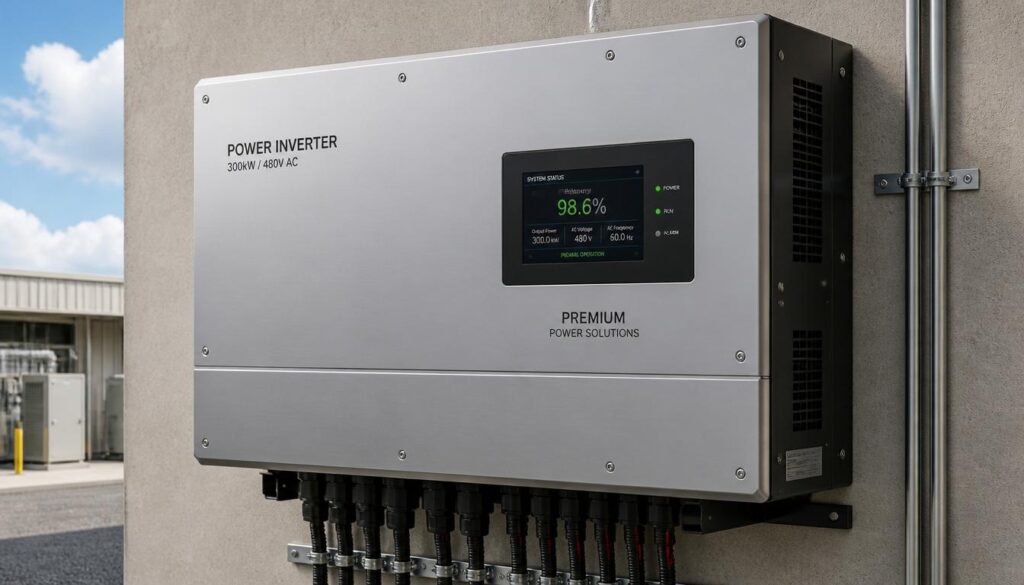
Integrate inverter controls with HVAC control logic. That prevents conflicting dispatch and ensures storage augmentation supports comfort priorities.
Strategic Takeaways: Match storage cycles to high-probability occupancy windows to improve LCOE outcomes.
Grid Services & Carbon Displacement
Occupancy-informed buildings can provide frequency response, reserve capacity, and peak shaving. Markets value predictable, dispatchable assets. Aggregators prefer portfolios that can guarantee availability windows.
Carbon displacement calculations should account for marginal grid carbon intensity during dispatch. Using occupancy forecasts, systems can choose to schedule energy use when grid carbon intensity is lower, maximising carbon reductions.
Pair participation with verified metering and settlement processes to monetise services without compromising tenant comfort.
Strategic Takeaways: Value grid services based on marginal carbon and price signals, not gross reductions alone.
The 2026 Decarbonization Compliance Framework
By 2026, regulatory regimes strengthen building performance expectations. The UK and EU updated Part L and Minimum Energy Efficiency Standards (MEES) to include occupancy-aware performance metrics. Failure to adapt creates material regulatory risk.
Operational reality requires compliance mapping across jurisdictions. Occupancy-based controls reduce measured energy intensity, but auditors require transparent baselines and measurement protocols.
Developers and asset owners must demonstrate ongoing performance, not just one-off commissioning tests. Continuous evidence reduces regulatory friction and improves refinancing terms.
Regulatory Landscape
Part L continues to target fabric efficiency and system emissions. MEES expanded to include operational intensity metrics and minimum uptime for ventilation. Local governments added disclosure requirements for controllable load flexibility.
Compliance now factors in documented controls and verified occupancy-adjusted baselines. Regulators expect evidence of ongoing analytics and incident reporting.
Noncompliance can trigger fines and reduced asset marketability. Banks and insurers increasingly condition lending on verified operational performance.
Strategic Takeaways: Treat occupancy intelligence as a compliance enabler, not solely an efficiency measure.
Compliance Pathways
Pathways include retro-commissioning, BMS upgrades, sensor validation, and verified third-party measurement. Use accredited verifiers for performance claims to support refinancing and green lending.
Document control logic, exception handling, and occupant engagement protocols. Maintain audit trails for occupancy data and control actions to satisfy regulators.
Include compliance cost in financial modelling. The cost often appears modest compared to lost revenue from noncompliant assets.
Strategic Takeaways: Build a compliance package that bundles sensors, controls, and verified reporting to reduce regulatory risk.
Deployment, Data Governance, and Risk
Large-scale deployments introduce data governance and operational risks. Occupancy data crosses privacy, security, and tenant relations boundaries. Governance frameworks must protect personal data while enabling control decisions.
Risk management demands a layered cyber defence and operational redundancy. Occupancy control must fail safe to maintain ventilation minima. That reduces health and liability risk.
Procurement must select integrators with proven privacy controls and BMS experience. Contracts should allocate responsibilities for data stewardship and incident management.
Privacy and Cyber Resilience
Occupancy data often links to individuals via badge or device identifiers. Anonymise and aggregate data where possible. Implement data minimisation and retention limits consistent with GDPR and local laws.
Apply role-based access and strict logging for occupancy telemetry. Use encryption in transit and at rest. Secure firmware updates and isolate control networks from enterprise IT.
Prepare incident response playbooks that include tenant notification and mitigation steps. Insurance policies should cover cyber incidents impacting building controls.
Strategic Takeaways: Anonymise occupancy signals and segment control networks to reduce privacy and cyber risk.
Change Management and Skills
Successful deployment requires facilities teams to adopt new workflows. Train staff on system logic, override protocols, and complaint resolution. Create incentives that align teams with energy targets.
Tenant engagement reduces perceived intrusion. Clear communications, complaint portals, and measured remediation pathways build trust. Engage tenant reps in pilot design.
Scale training through centralised playbooks and regional champions. Retain commissioning firms for initial tuning and handover.
Strategic Takeaways: Invest in people and processes; technology alone will not deliver sustained savings.
Executive Decarbonization Roadmap:
- Audit occupancy variance and control granularity across the portfolio.
- Pilot multimodal sensing with edge compute on high-priority assets.
- Standardise integrations and operational KPIs for rollouts.
- Secure green financing tied to verified occupancy-adjusted savings.
- Scale with central governance and continuous compliance reporting.
Economic Models, Financing, and the Wintle Occupancy Efficiency Model
Capital structures must reflect the revenue and risk profiles of occupancy intelligence projects. Leasing and performance contracting attract corporate balance sheets that prefer predictable cash flows. Green bonds increasingly accept verified operational outcomes as collateral.
Operational reality favours blended financing that couples energy savings with grid services revenue. Lenders require auditable baselines and escrow arrangements for disputed savings.
The Wintle Occupancy Efficiency Model provides a standardised way to underwrite projects across portfolios. It converts occupancy distributions into expected energy and revenue curves, producing probabilistic cash flows for lenders and owners.
Financing Structures
Use EPCs and shared savings contracts for assets with conservative occupancy variance. Slicing revenues between energy savings and flexibility income aligns stakeholder incentives. Performance guarantees should include occupancy-adjusted baselines to avoid disputes.
Green loans and sustainability-linked loans provide lower coupon rates if KPIs such as Carbon Intensity reductions meet thresholds. Insurers now offer product lines that hedge tenant complaint liabilities tied to control interventions.
Public funds and grants remain available for municipally owned assets, often improving payback by accelerating sensor deployment.
Strategic Takeaways: Layer financing to match cash flow profiles and to capture both energy and flexibility income.
Wintle Occupancy Efficiency Model (WOEM)
WOEM converts hourly occupancy probability distributions into expected HVAC energy consumption. It models building thermal response, HVAC COP, and ventilation constraints to output probabilistic energy savings and flexibility availability.
Inputs include historical occupancy traces, envelope properties, HVAC characteristics, and local price and carbon signals. The model yields P50 and P90 savings forecasts and an availability curve for grid services.
Lenders can use WOEM outputs to size reserves and to determine risk-adjusted returns. Asset managers can prioritise investments by WOEM-derived marginal abatement cost curves.
Strategic Takeaways: Use WOEM to create underwritable, transparent savings forecasts for investors and lenders.
Deployment Case Architecture and QA
Deployment success depends on architecture choices and stringent QA protocols. Architectures should separate control-critical loops from analytics and expose clear rollback mechanisms. QA must validate sensor calibration, control logic, and occupant impact.
Operational reality includes inevitable sensor drift and software regressions. Implement scheduled re-calibration and automated anomaly detection to maintain performance.
Procurement must demand transparent SLAs that include uptime, response times, and performance validation metrics. Include penalties for poor integration that undermines savings claims.
Implementation Architecture
Adopt a three-tier architecture: edge control for latency-sensitive actions, cloud for analytics and forecasting, and orchestration for portfolio policy. Each tier must have clear responsibilities and failure modes.
Design edge nodes to operate autonomously when disconnected. Local policies should define safe operating states based on last-known occupancy patterns. Orchestration policies must respect these local constraints.
Document interfaces and message semantics. Use interoperable protocols to reduce integration risk and to future-proof systems.
Strategic Takeaways: Keep essential control local to reduce operational risk while using cloud for non-critical analytics.
Quality Assurance & Continuous Commissioning
QA starts with sensor acceptance testing and includes staged commissioning under occupant scenarios. Use automated testbeds to simulate occupancy swings, sensor failures, and market signals.
Continuous commissioning should run anomaly detection on both occupancy signals and energy baselines. Trigger onsite audits when expected savings diverge materially from measured outcomes.
Maintain a transparent issue log accessible to stakeholders. That log helps in forensic analysis and in maintaining trust with tenants and financiers.
Strategic Takeaways: Treat commissioning as an ongoing discipline, not a one-off project milestone.
FAQ
How should a large landlord underwrite occupancy-based HVAC upgrades for a mixed-use portfolio with hybrid work patterns in 2026?
Underwrite using probabilistic occupancy distributions derived from badge, WiFi, and historical calendar data. Use WOEM to convert those distributions into P50 and P90 savings and flexibility availability. Stress test for occupancy rebound scenarios and sensor failure modes. Price conservatively and include availability reserves. Structure contracts with performance tranches, using green loans for base capital and flexibility revenue sharing for upside. Ensure compliance pathways for Part L and local MEES adjustments to avoid valuation leakage.
What risk controls are essential when integrating occupancy sensors with legacy BMS in centrally managed multi-tenant offices?
Isolate control network segments and deploy authenticated gateways. Ensure edge controllers execute fail-safe ventilation minima when connectivity fails. Require device identity, signed firmware, and encrypted telemetry. Validate sensor fusion logic with dual-sensor checks to avoid false negatives. Maintain tenant-facing override and complaint handling processes. Mandate third-party cyber insurance and contractual SLAs that allocate liability for control-induced disruptions.
How can asset managers price grid service revenue from occupancy-informed HVAC in markets with volatile flexibility tariffs?
Model flexibility availability probabilistically using WOEM and conservative occupancy tails. Map availability to historical tariff volatility and design revenue forecasts with both mean and tail scenarios. Use aggregators to smooth volatility, accepting a margin for their service. Structure contracts with minimum guaranteed payments and upside sharing. Stress test cash flows for high volatility months and include liquidity buffers in financing models to cover performance shortfalls.
What are the privacy compliance steps required when using badge and WiFi data to infer occupancy for HVAC control across UK properties?
Minimise personal data by anonymising and aggregating signals at the edge. Limit retention to operationally necessary windows and delete raw identifiers. Update privacy notices and obtain lawful bases under GDPR, typically legitimate interests mapped to building operations. Conduct DPIAs and engage data protection officers early. Provide opt-out mechanisms and maintain documented access controls and audit trails. Ensure contracts with vendors include data processing addenda and breach notification timelines.
How does occupancy-based control change the capital planning horizon for heat pump deployments in offices transitioning from gas?
Occupancy control reduces peak electric demand and allows smaller heat pump sizing while maintaining comfort. Use WOEM to simulate coincident peak loads under hybrid occupancy to right-size heat pumps and storage. Shift capital planning to include controls and sensors as part of the heat pump project to reduce total installed capacity. Factor reduced maintenance and avoided gas infrastructure decommissioning into NPV. Align with electrification incentives and green loans for better financing terms.
Conclusion: Occupancy-Based Climate Intelligence: The End of the "Empty Office" Energy Drain
Occupancy-based climate intelligence removes the structural inefficiency of conventionally conditioned, underused office stock. It converts latent waste into measurable savings and flexible grid value. Institutional asset value now hinges on Net-Zero Alpha, LCOE, and verified occupancy-adjusted performance.
Strategic consolidation of sensing, edge compute, and verified analytics produces durable outcomes. The Wintle Occupancy Efficiency Model provides lenders and owners with a common underwriting language. Portfolio rollouts must prioritise assets with high occupancy variance and clear integration paths to reduce Decarbonization Friction.
Operational implementation requires privacy-respecting sensor mixes, hardened edge controls, and continuous commissioning. Finance structures must layer green loans with performance tranches and aggregator partnerships to manage volatility. Compliance alignment with 2026 Part L and MEES updates secures regulatory upside and avoids penalties.
Forecast: Over the next 12 months, expect rising demand for verified occupancy-adjusted savings in lending covenants. Grid operators will expand participation rules for predictable building-based flexibility. Market prices for short-duration flexibility will remain volatile, increasing aggregator value. Carbon-intensity-driven scheduling will grow, making on-site storage coupled with occupancy intelligence more bankable. Owners who standardise occupancy intelligence across portfolios will report improved valuations and faster access to green capital.
Meta Description: Occupancy-based climate intelligence ends empty-office energy waste, enabling portfolio-level savings, grid services, and 2026 compliance readiness.
SEO Tags: occupancy intelligence, HVAC optimization, electrification maturity, grid-interactive HVAC, carbon displacement, WOEM, building decarbonization