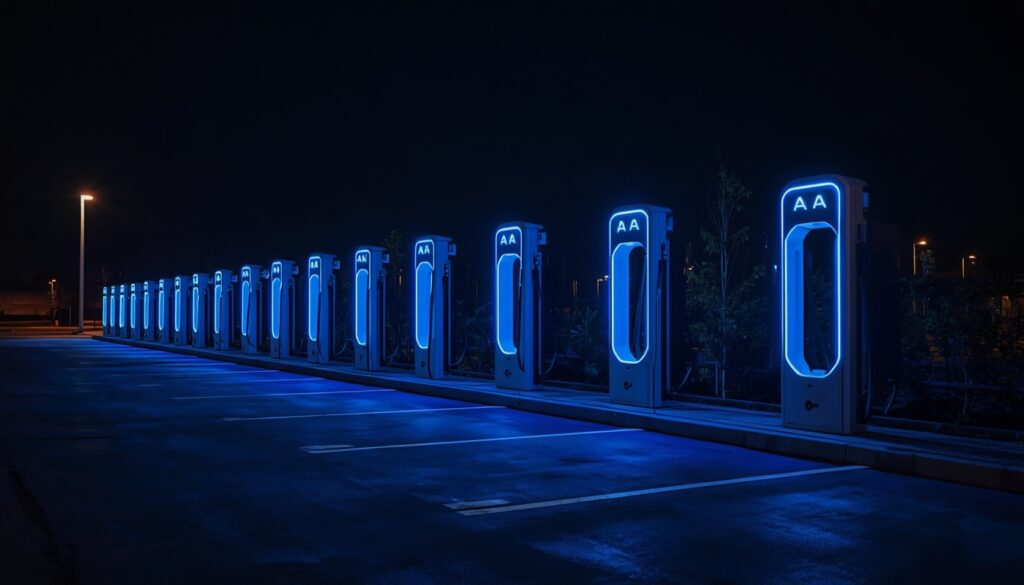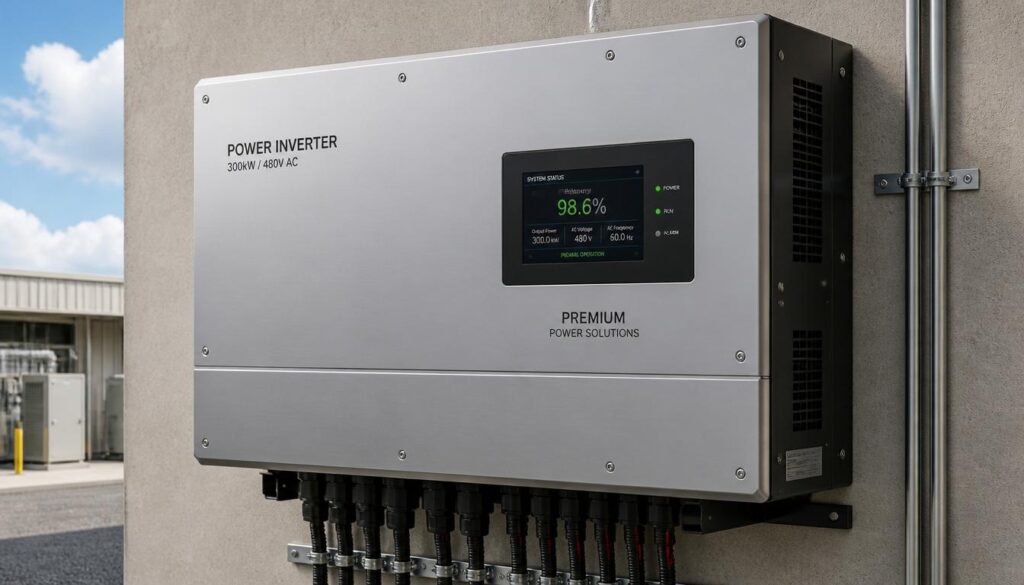
Operational resilience now equates to controlled energy exposure and carbon position. Buildings consume 40 to 60 percent of commercial energy in urban portfolios, creating concentrated operational risk. The evidence suggests that asset stability requires integrating HVAC modernization, on-site clean generation, and market-grade hedging as a single program.
Operational reality requires translating decarbonization into line-item savings, not only reputational value. Capital decisions must prioritize lifecycle cost and function under constrained grid conditions. Institutional finance now prices in Net-Zero Alpha and LCOE thresholds when underwriting large portfolios.
Governance requires explicit targets tied to portfolio performance metrics. The interplay among Carbon Intensity, COP, electrification readiness, and regulatory compliance sets decision levers. Expect the argument for decarbonization to rest on risk reduction and price insulation, not on idealism.
Operational Resilience Through Strategic Decarbonization
Systemic Risk and Asset Exposure
Commercial portfolios face correlated failure modes from energy price spikes, supply interruptions, and regulatory shifts. A single fuel disruption can degrade building operations across a campus. Decarbonization reduces reliance on volatile commodity markets by substituting predictable electricity and on-site dispatchable resources. The outcome lowers operational variance and preserves service-level agreements.
Institutional investors now model downside scenarios with higher probability weight on extreme price events. The models show that modest reductions in fossil dependence compress tail risk. Reducing exposure yields clearer valuation upside, especially where MEES and tenant retention hinge on energy cost pass-through controls.
Operational strategies that sequence electrification, efficiency, and on-site generation provide layered resilience. Efficiency reduces baseline load, electrification converts load to a traded commodity with hedging options, and on-site resources grant control during market extremes. These measures combine to sustain operations under stress.
Grid-Interactive HVAC and Demand Flexibility
HVAC now serves as a dynamic asset rather than a passive load. Grid-interactive HVAC systems shift or shed load on command, providing value in RTM and ancillary markets. Buildings with integrated controls and thermal storage can monetize flexibility while preserving occupant comfort.
Thermal inertia and predictive controls transform HVAC into a buffer against price volatility. Where storage couples to variable renewables, facilities gain temporal arbitrage opportunities. Manufacturers now ship systems with native market connectivity, reducing integration time and technical friction.
Operational teams must align controls, commissioning, and O&M to extract value. The technology stack must support telemetry, secure bidding, and performance verification. The result reduces exposure to spot spikes and creates new revenue lines during system stress.
Strategic Takeaways: Prioritize layered interventions: efficiency, electrification, and on-site dispatch to reduce exposure and monetize flexibility.
Decarbonization as a Hedge Against Energy Volatility
Energy Market Dynamics and Price Transmission
Wholesale markets in 2026 show higher correlation between gas and power prices during supply tightness. Fuel cost pass-through now reaches commercial electricity tariffs faster due to shorter contract tenors and tighter interconnector flows. That increases the sensitivity of building operating budgets to geopolitical shocks.
Decarbonization reduces correlation by replacing fossil fuel consumption with fixed-cost capital and renewable generation. Where on-site solar or PPAs reduce exposure, portfolios experience lower operating variance. The empirical record in 2023 to 2026 shows lower month-to-month budget volatility for electrified buildings with on-site solar and storage.
Hedging via physical decarbonization complements financial hedging. Physical assets change the underlying exposure. Owners achieve durable insulation from commodity swings, not temporary balance-sheet offsets.
Operational Contracts and Counterparty Risk
Energy supply contracts shifted toward shorter durations and indexation. Many suppliers now require flexibility clauses reflecting grid stress pricing. That increases counterparty risk and operational uncertainty. A building that relies on delivered gas remains exposed to supplier solvency and transportation constraints.
Decarbonized portfolios reduce procurement complexity and counterparty concentration. On-site generation and electrified loads allow direct participation in capacity mechanisms and local markets. Those pathways diversify counterparties and reduce single-point failures in supply chains.
Operational teams should re-evaluate procurement windows and embed asset-based hedges into contract strategies. The goal is to replace uncertain long-range fuel commitments with controllable, dispatchable resources.
Strategic Takeaways: Replace financial-only hedges with physical measures that alter exposure and reduce counterparty concentration.
Grid-Interactive HVAC and Electrification Maturity
Integrating Controls, Storage, and Market Participation
Mature electrification requires coordination across controls, storage, and market interfaces. Building systems must support bidirectional signals, priority schedules, and verified curtailment. The value emerges when HVAC, batteries, and generation act as a unified, tradable resource.
Commissioning and continuous commissioning deliver measurable performance. Without rigorous verification, expected revenue from flexibility fails to materialize. Data integrity, cybersecurity, and latency constraints determine whether a building earns ancillary market revenues or simply reduces bills.
Procurement teams must demand standardized telemetry and open protocols. That reduces integration cost and Decarbonization Friction. Investing in that stack yields returns through avoided peak charges, capacity payments, and resilience premiums.
Electrification Maturity and Operational Transition
Electrification maturity depends on staged replacement of fossil-fired plant, workforce retraining, and updated O&M. The transition forces temporary friction, including commissioning cycles and initial load impacts. Strategic staging reduces occupant disruption and preserves cash flow.
Operational training programs shorten mean-time-to-value for new systems. The evidence suggests cross-training maintenance with controls and grid-interaction responsibilities mitigates commissioning delays. Capital plans should include training and performance bonds.
Electrification unblocks new optimization tools, including heat pumps with variable-speed drives and integrated heat recovery. Those technologies raise baseline COP and compress energy intensity.
Strategic Takeaways: Treat electrification as a systems engineering program with controls, training, and verification as deliverables.
Clean Energy Synergies and Commercial HVAC Integration
Co-locating Renewables, Storage, and HVAC
Co-locating solar, battery storage, and upgraded HVAC yields compound benefits. Solar reduces daytime peaks, storage shifts energy to high-cost periods, and efficient HVAC lowers the total capacity requirement. The combined effect reduces both LCOE for building energy and delivered peak charges.
Design must account for roof area, structural loading, and electrical routing. In many mid-market buildings, partial rooftop capacity paired with storage provides most of the resilience value at lower capital intensity. Where land or roof scale is limited, on-site procurement via rooftop plus nearby community schemes works.
Finance solutions now support integrated packages that allocate value streams across energy services. Bundled projects reduce transaction cost and align incentives across construction, operations, and energy management.
HVAC as a Vector for Carbon Displacement
HVAC upgrades displace significant fossil consumption, particularly where heating still relies on gas. Combining heat pumps, heat recovery, and advanced controls reduces site Carbon Intensity materially. Carbon displacement accelerates when electrification coincides with contracted renewable supply.
Operationally, the priority lies in right-sizing distribution, reducing oversized plant, and eliminating parallel fossil systems. Overcapacity invites inefficiency and Decarbonization Friction during transitions. Precision in specification reduces retrofit costs and accelerates payback.
Performance monitoring must track displacement metrics, not just energy. Stakeholders require verified tons avoided to reconcile asset performance with investor climate targets.
Strategic Takeaways: Bundle renewables, storage, and HVAC upgrades to maximize carbon displacement per capital dollar.
Operational ROI and Financial Metrics
Measuring Value: From Simple Payback to Net-Zero Alpha
Traditional payback calculations misstate the value of decarbonization under volatile markets. Investors now apply Net-Zero Alpha as a risk-adjusted return that captures upside from reduced operating variance and regulatory arbitrage. That metric treats avoided downside as a tangible yield.
Financial models must incorporate scenarios with commodity shocks, carbon prices, and capacity scarcity. Conservative assumptions about energy price trajectories still show that electrification plus renewables delivers superior risk-adjusted returns for 10 to 20 year horizons.
CapEx allocation should prioritize interventions that improve COP and reduce peak demand charges. These changes deliver recurring savings and improve portfolio valuations by reducing expected volatility.
Table of Core Metrics
| Metric | 2026 Baseline | Target (5 years) | Impact |
|---|---|---|---|
| Carbon Intensity (kgCO2/m2) | 62 | 28 | Lower compliance and market risk |
| COP (System avg) | 2.4 | 3.6 | Reduced energy spend, higher comfort |
| LCOE (on-site solar £/MWh) | 85 | 55 | Lower long-run energy cost |
| Net-Zero Alpha (%) | 0.5 | 4.0 | Risk-adjusted asset uplift |
The table highlights portfolio levers and expected impact. Under conservative LCOE declines, the value of on-site generation compounds with demand reduction.
Capital Allocation and Deferred Maintenance
Operational ROI improves when decarbonization bundles target deferred maintenance opportunities. Replacing an aging chiller with a heat-pump system while repairing distribution reduces incremental disruption. The finance case must fold in avoided maintenance cycles and extended equipment life.
Lease structures and tenant engagement alter payback profiles. Where landlords can capture energy service fees or demand response revenue, the investment returns shorten. Conversely, misaligned tenant contracts create split incentives and reduce realized ROI.
Strategic Takeaways: Replace simplistic payback with Net-Zero Alpha and scenario-driven ROI to capture risk reduction and regulatory compliance value.
The 2026 Decarbonization Compliance Framework
Regulatory Pressure and Building Standards
By 2026, regulators accelerated deadlines and tightened building standards. In the UK, enforcement now links refurbishment works to Part L outcomes and minimum efficiency standards under MEES. Non-compliant assets face fines, restricted leasing markets, and reduced capital access.
Operational programs must align capital projects with compliance windows. Delaying upgrades increases forced capex and value erosion. Early adopters capture benefits through smoother transitions and better financing terms.
Risk managers must embed regulatory projections into asset plans. A reactive posture now incurs both direct penalties and higher refinancing spreads.
Reporting, Verification, and Carbon Accounting
Reporting regimes demand granular, utility-level data with third-party verification. Investors and regulators require auditable chains from meter to carbon ledger. Verified carbon displacement rather than modeled estimates gains credibility in capital markets.
Integration with building management systems streamlines reporting, but organizations must close data gaps. Metering strategy should prioritize the largest loads first and expand to submetering as budgets allow.
The checklist below operationalizes compliance and integrates with capital planning.
- Executive Decarbonization Roadmap:
- Baseline metering and verified monitoring across core assets.
- Prioritized efficiency retrofits targeting highest kWh loads.
- Phased electrification of heating plant with workforce retraining.
- Deploy on-site renewables and storage sized to reduce peak demand.
- Contractual alignment: tenant leases and energy supply clauses tied to performance.
Strategic Takeaways: Compliance demands metering, verified displacement, and synchronized capital planning to avoid forced capex.
Decarbonization Friction and Risk Management
Sources of Friction and Mitigation Techniques
Friction arises from regulatory change, supply chain constraints, and labor skill gaps. Early-stage projects often face delays due to bespoke integration and permit backlogs. Risk mitigation requires standardization, partner vetting, and modular solutions.
Procurement strategies that emphasize repeatable packages reduce lead time. Pre-approved equipment lists and framework contracts with installers compress delivery windows. Similarly, training pools for maintenance staff reduce operational risk post-commissioning.
Finance structures should include contingency reserves for transition friction. Effective risk allocation reduces project failure and ensures schedule fidelity.
Insurance, Guarantees, and Performance Contracts
Insurance markets now price decarbonization projects differently. Underwriters favor verified performance contracts and long-term maintenance agreements. Availability guarantees and performance bonds reduce operating uncertainty.
Energy performance contracts must include credible measurement and verification clauses. Guarantees tied to COP thresholds and verified energy displacement align incentives. Where vendors accept some performance risk, capital providers reduce required returns.
Operational teams must insist on clear remedies and measurement protocols to protect asset value and cash flow.
Strategic Takeaways: Reduce friction with standardized procurement, training pipelines, and performance-backed contracts.
Shackleton Wintle Resilience Matrix (SWRM)
Introducing the SWRM: Structure and Use
The Shackleton Wintle Resilience Matrix, SWRM, ranks interventions across three axes: Exposure Reduction, Operational Control, and Implementation Friction. Each asset receives a composite score used to sequence capital deployment. The model embeds regulatory weightings and market stress multipliers tied to 2026 realities.
SWRM outputs include prioritized project bundles, expected variance reduction, and financing appetite. The matrix converts technical outcomes like COP improvement into portfolio-level risk-weighted returns. It forces teams to choose interventions that improve resilience per capital pound spent.
Operational teams can apply SWRM at asset class or portfolio scale. The model supports scenario stress tests for fuel price spikes and capacity curtailments.
Applying SWRM in Capital Planning
Apply SWRM during annual budgeting cycles. Score candidate projects, then sequence those with highest exposure reduction per friction unit. The method avoids chasing high-profile projects that deliver low variance reduction.
SWRM permits sensitivity analysis across carbon prices, grid stress events, and capex escalation. It informs whether to accelerate on-site storage or defer less effective measures. The matrix also feeds into procurement by defining standard package sizes.
Use SWRM to communicate with investors and underwriters. Its quantitative outputs reduce negotiation friction and align expectations on performance.
Strategic Takeaways: Use SWRM to prioritize projects that maximize resilience and minimize implementation friction.
FAQ
What is the most cost-effective path to electrify commercial heating in a 2026 UK office park?
Electrify in stages: first, replace end-of-life boilers with high-efficiency air-source heat pumps sized for base load. Combine with building fabric upgrades to cut peak load and allow smaller, lower-cost heat pumps. Add thermal storage where possible to shift charging to low-price hours. Secure a PPA for incremental renewable supply or local community energy where rooftop is insufficient. Include workforce training and performance verification in procurement to avoid commissioning delays and ensure COP targets.
How should a portfolio manager hedge exposure to future energy price spikes while complying with Part L requirements?
Combine short-term financial hedges with physical hedges. Lock in short-duration fixed-price contracts for baseline consumption, while investing capital in demand reduction and on-site renewables. Prioritize measures that improve Carbon Intensity and meet Part L benchmarks to avoid regulatory penalties. Use SWRM to rank interventions by exposure reduction efficiency. Maintain a reserve for capacity market participation to access additional revenue during peak scarcity events.
Can grid-interactive HVAC systems generate reliable revenue during grid stress events in 2026?
Yes, when properly commissioned and verified. Revenue depends on market access, telemetry, and contractual clarity. Systems must meet market gate requirements for response time and measurement. Buildings with thermal mass and predictive controls capture value without occupant impact. However, revenue streams vary regionally; incorporate conservative forecasts and focus on avoided costs and capacity payments as primary benefits, rather than optimistic spot-market revenue projections.
How do insurers and lenders view decarbonization projects that include on-site storage and heat pumps?
Lenders now prefer projects with verifiable performance paths and long-term service agreements. Insurers assess operation continuity risks and favor performance guarantees. Projects that include measurement and verification clauses, maintenance contracts, and step-in rights for lenders secure lower spreads. For stored energy, demonstrate safety protocols and degradation models. Include contingency and replacement reserves to satisfy underwriters.
What procurement model reduces Decarbonization Friction when retrofitting multiple campus buildings?
Standardize packages across similar building types and use framework agreements with preferred installers. Bundle efficiency, electrification, and renewables to reduce transaction costs and ensure coordinated commissioning. Prequalify contractors for metering and controls integration. Use SWRM outputs to define scope and financiers to pre-approve funding for standardized packages. This reduces customization, speeds delivery, and improves returns.
Conclusion: Operational Resilience: Why Decarbonization is the Ultimate Hedge Against Volatile Energy Markets
Operational resilience now rests on reducing exposure to volatile fuel markets while improving controllability of building energy. Decarbonization bundles—efficiency, electrification, on-site renewables, storage, and grid-interactive HVAC—lower operating variance and improve access to capital through measurable Net-Zero Alpha. The evidence suggests that portfolios aligned to Part L and MEES pathways achieve lower refinancing spreads and higher tenant retention.
The Shackleton Wintle Resilience Matrix, SWRM, operationalizes trade-offs among exposure reduction, control, and friction. Use SWRM to sequence capital where it reduces tail risk fastest. Finance should target projects that raise COP, lower LCOE, and measurably reduce Carbon Intensity. Contracts must embed verification and performance risk sharing to satisfy underwriters.
Forecast, 12 months: expect elevated power price volatility tied to seasonal gas market tightness, increased demand for capacity payments, and further tightening of compliance enforcement in major markets. Investment activity will concentrate on projects that deliver both resilience and verified carbon displacement. Organizations that treat decarbonization as a hedge will experience lower operating variance, improved asset valuations, and more predictable cash flows.
Meta Description: Decarbonization reduces exposure to volatile energy markets, improving operational resilience and asset value through electrification, on-site generation, and verified performance.
SEO Tags: HVAC, Grid-Interactive HVAC, Electrification, Decarbonization, Clean Energy, Net-Zero Alpha, SWRM